
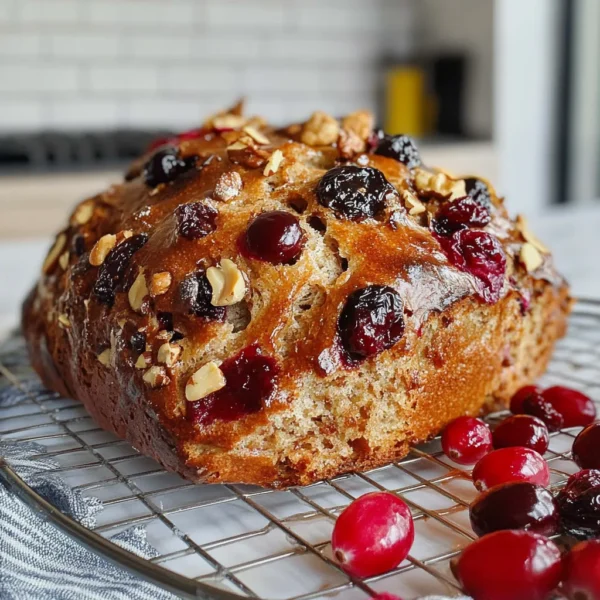
Ah, the smell of freshly baked bread wafting through the kitchen—there’s just nothing quite like it! Whenever I find myself in a cozy spot, nestled with a warm cup of tea, my mind drifts back to my grandmother’s kitchen, where baking bread was an art form, a warm hug in carbohydrate form. One of her many gems was her no-knead bread, a simple marvel that felt like magic. Today, I want to share my twist on her classic: No Knead Cranberry Walnut Bread. This delightful creation brings together the tang of cranberries, the crunch of walnuts, and the beautiful rustic quality of a bread that everyone thinks is complex but truly isn’t! Let’s dive into this delicious adventure!
Why You’ll Love This Recipe
- Effortless preparation: Just mix and let it rise—no fancy techniques or equipment needed!
- Deliciously unique: The sweet-sour flavor of cranberries paired with the nutty crunch of walnuts will brighten up your table.
- Perfect for sharing: This bread is a crowd-pleaser, making it an excellent choice for gatherings or cozy meals.
- Warm, inviting aroma: Your home will smell heavenly while it bakes—trust me; it’s worth it!
- Budget-friendly: Simple ingredients that don’t break the bank.
Ingredients
Here’s what you’ll need to create this loaf of goodness:
- 3 cups all-purpose flour (plus more for dusting)
- 1 ½ teaspoons salt
- ½ teaspoon instant yeast
- 1 ½ cups warm water (not too hot, just warm to the touch)
- 1 cup dried cranberries (sweetened or unsweetened, your choice!)
- 1 cup walnuts, chopped
Note: Feel free to substitute the cranberries with raisins or any dried fruit you love. And if you’re nut-free, just omit the walnuts!
Step-by-Step Instructions
Let’s get our hands a bit floury and bake this bread together!
- Mix the Dry Ingredients: In a large mixing bowl, combine the flour, salt, and instant yeast. Just give it a gentle stir to mix them all together.
- Add Water: Pour in the warm water and mix with a spatula or your hands until a shaggy dough forms. It will be sticky and messy, but that’s just how it should be—don’t worry about it being perfect!
- Incorporate Fruits and Nuts: Gently fold in the cranberries and chopped walnuts. Don’t overmix; just ensure they’re distributed evenly throughout the dough.
- Let It Rise: Cover the bowl with plastic wrap or a kitchen towel. Leave it in a warm, draft-free place for about 12 to 18 hours. The longer, the better! This long rise is what gives your bread its beautiful flavor and texture.
- Prepare a Baking Surface: After the dough has risen and looks bubbly, flour your countertop generously. Turn out the dough onto the floured surface—the less you handle it, the better!
- Shape the Dough: Gently shape the dough into a round ball without kneading. Just fold it over on itself a couple of times to bring it together lightly.
- Second Rise: Place your dough ball onto a floured piece of parchment paper. Cover it with a towel and let it rest for another 1-2 hours. This short rise will give it a little more lift in the oven!
- Preheat the Oven: While your dough is resting, preheat your oven to 450°F (232°C) and place a heavy pot or Dutch oven (with the lid) inside to heat up. Trust me; this is a game-changer for achieving that perfect crust!
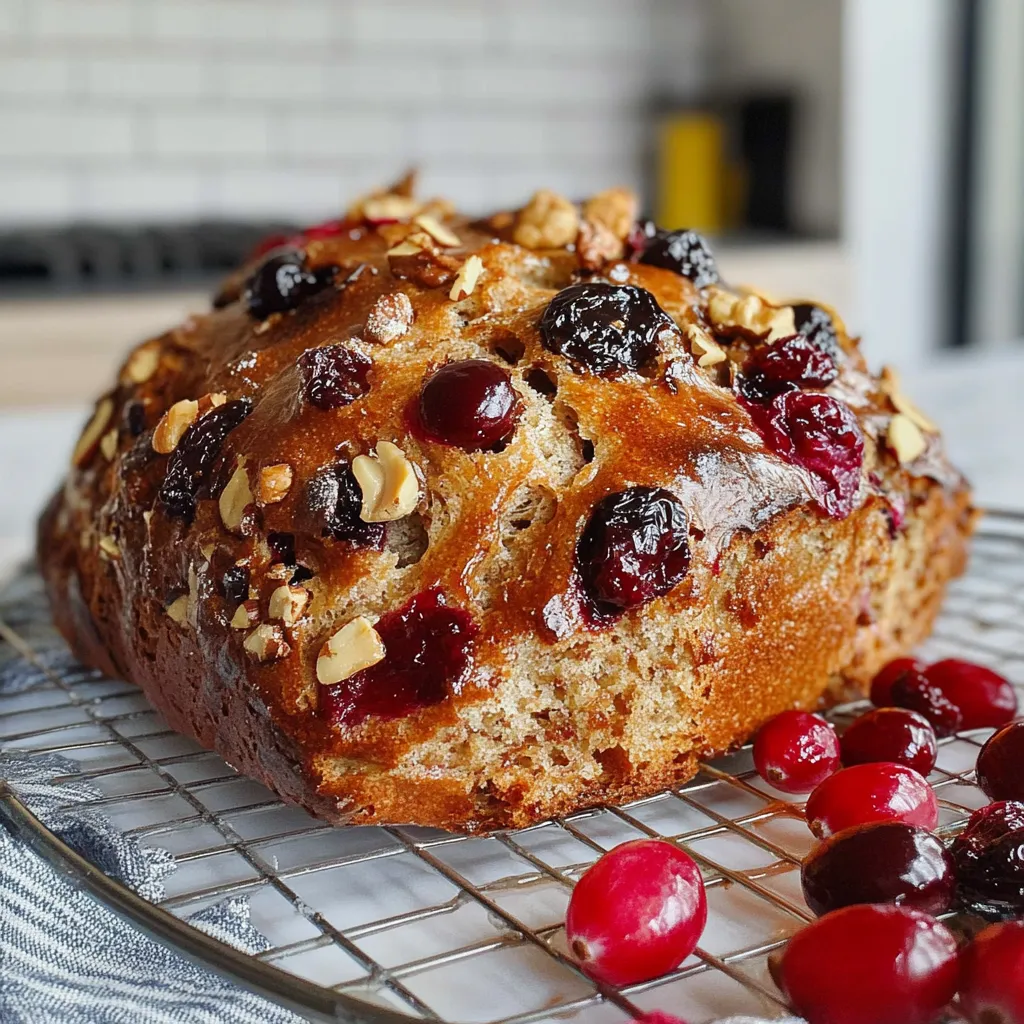
- Bake the Bread: Once the oven and pot are hot, carefully remove the pot (watch your fingers!). Lift the dough using the parchment and place it into the pot. Cover it with the lid and bake for 30 minutes. Then, remove the lid and bake for another 15-20 minutes until it’s golden brown.
- Cool It Down: Once baked, transfer your aromatic creation to a wire rack. Let it cool for at least 30 minutes before slicing. I know it’s tough to resist, but the wait is worth it!
Pro Tips & Variations
Want to switch things up a bit? Here are some fun ideas:
- Spices: Add a sprinkle of cinnamon or nutmeg to the dry ingredients for a warm, seasonal twist.
- Herbs: Consider throwing in some rosemary or thyme for an earthy flavor.
- Cheese: A handful of crumbled feta or sharp cheddar would create a delightful contrast with the sweetness of the cranberries.
- Gluten-Free Option: You can use a 1:1 gluten-free flour blend—just make sure it has xanthan gum included!
Serving Suggestions
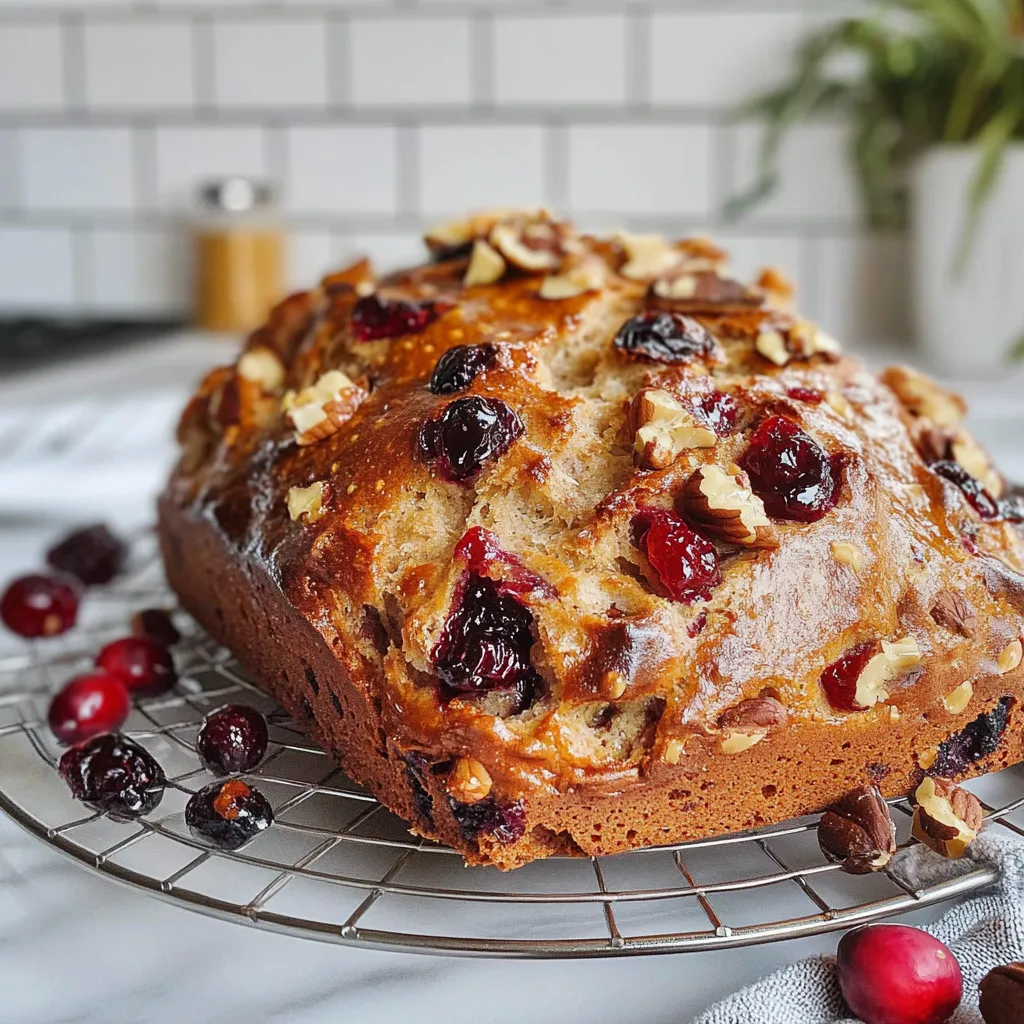
Picture this: You’ve just pulled the warm bread from the oven, and the inviting aroma fills the room. It’s perfect served warm, slathered with a generous amount of butter or cream cheese. For a cozy café vibe at home, serve it alongside a steaming cup of coffee or tea. It would also make an excellent companion for a cheese platter, paired with soft cheeses and perhaps a glass of white wine. And if you’re feeling adventurous, toast slices and top them with your favorite jams for a breakfast treat that’ll start your day on a sweet note.
Storage Tips
Now, if you somehow manage to have leftovers (though I doubt it!), here’s how to keep them fresh:
- Room Temperature: Wrap the bread in a clean kitchen towel and store it in a bread box or a paper bag to keep it from getting too dry. It’ll stay fresh for a couple of days.
- Refrigerating: I don’t recommend it, as refrigeration can dry it out, but if you must, wrap it tightly in plastic wrap. Just note that it’ll probably lose some of that beautiful flavor.
- Freezing: To freeze, slice the bread and place the pieces in a resealable bag with as much air removed as possible. It can last up to three months in the freezer. To reheat, pop the slices in a toaster or let them thaw at room temperature.
FAQs
Can I use fresh cranberries instead of dried cranberries?
Using fresh cranberries would change the flavor profile quite a bit. Fresh cranberries are tart, so if you go this route, consider adding some extra sugar to balance the acidity.
What is the best way to know if my bread is done?
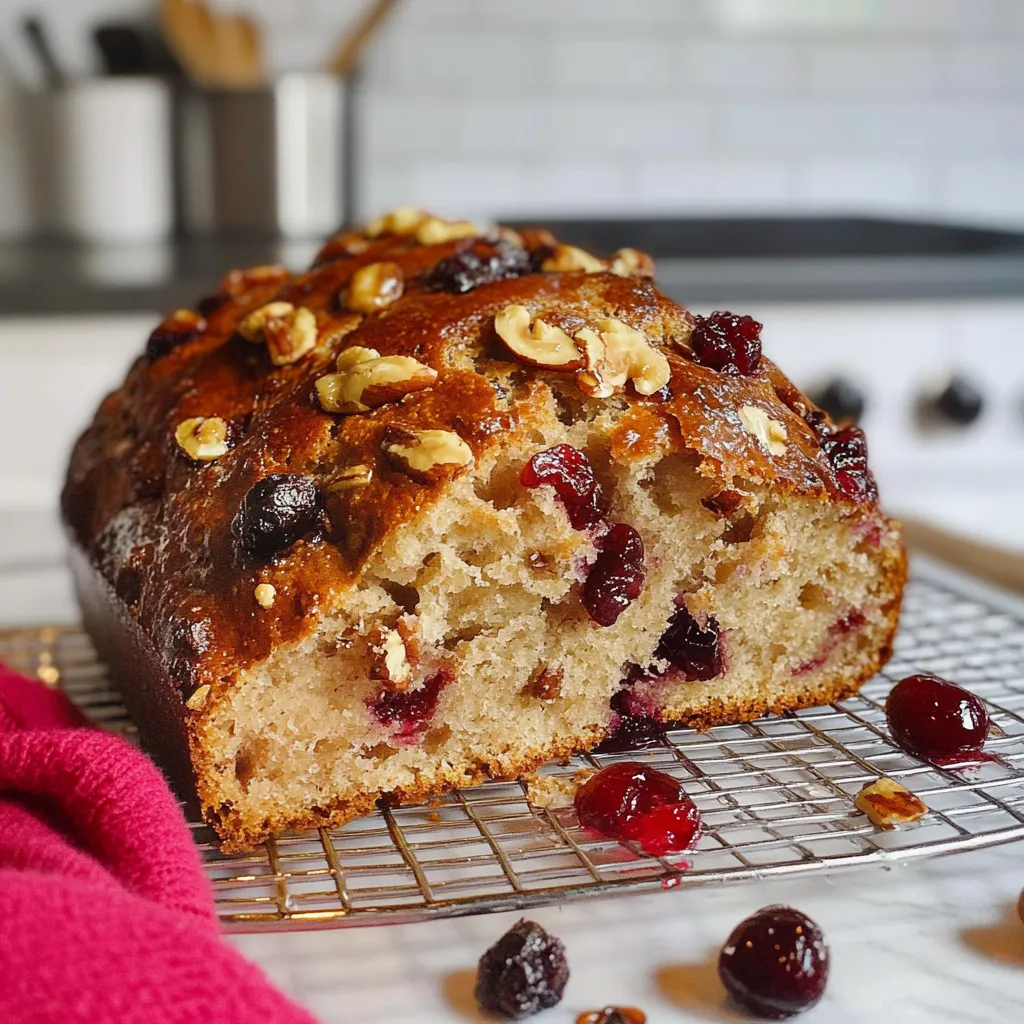
The bread should be a deep golden brown on top. If you tap the bottom, it should sound hollow. An instant-read thermometer is also a great tool. Aim for an internal temperature of around 200°F (93°C).
Can I make this bread without walnuts?
Absolutely! You can either leave the walnuts out or substitute them with seeds like sunflower or pumpkin seeds for a different crunch. Or just load it up with more cranberries!
Why does the dough need such a long rise time?
The long rise time allows for better flavor development and a more complex texture. It also contributes to the beautiful, airy crumb that’s the hallmark of artisan bread. Time is your friend here!
Conclusion
And there you have it, my delightful No Knead Cranberry Walnut Bread! I can’t wait for you to try this out and fill your home with that magical aroma. It’s a perfect bread for any occasion—be it a humble weekday evening or a festive gathering. If you give it a whirl, drop a comment below and let me know how it turned out. Happy baking, and remember: no dust on the apron means you’re not having enough fun!



Leave a Comment